Soft Productivity: Why Working Less Gets More Done
It’s 8 PM. The blue light is stinging your eyes, and the cursor is blinking on a document that looks exactly like it did at 10 AM. You sat in that chair for ten hours. You answered emails, sat in meetings, and juggled three different projects. But when you finally stand up to stretch, the crushing weight hits: you have absolutely nothing substantial to show for it.
You check your email before your feet hit the floor. Lunch is an afterthought. You grind through weekends to “catch up,” only to start Monday already exhausted. It feels like you’re running a marathon at a sprint pace, yet the finish line keeps moving further away. I’ve been there. That constant hum of anxiety isn’t dedication; it’s a bottleneck.
We’ve been sold the lie that brute force equals high impact. We wear burnout like a badge of honor, confusing hours logged with value created. But here is the uncomfortable truth: your brain isn’t designed for linear output without pause. When you push through the fatigue, you aren’t being heroic—you’re just producing noise. The solution isn’t a better time-management app; it’s a paradigm shift called “soft productivity.”
The Productivity Cliff: When Effort Becomes the Enemy
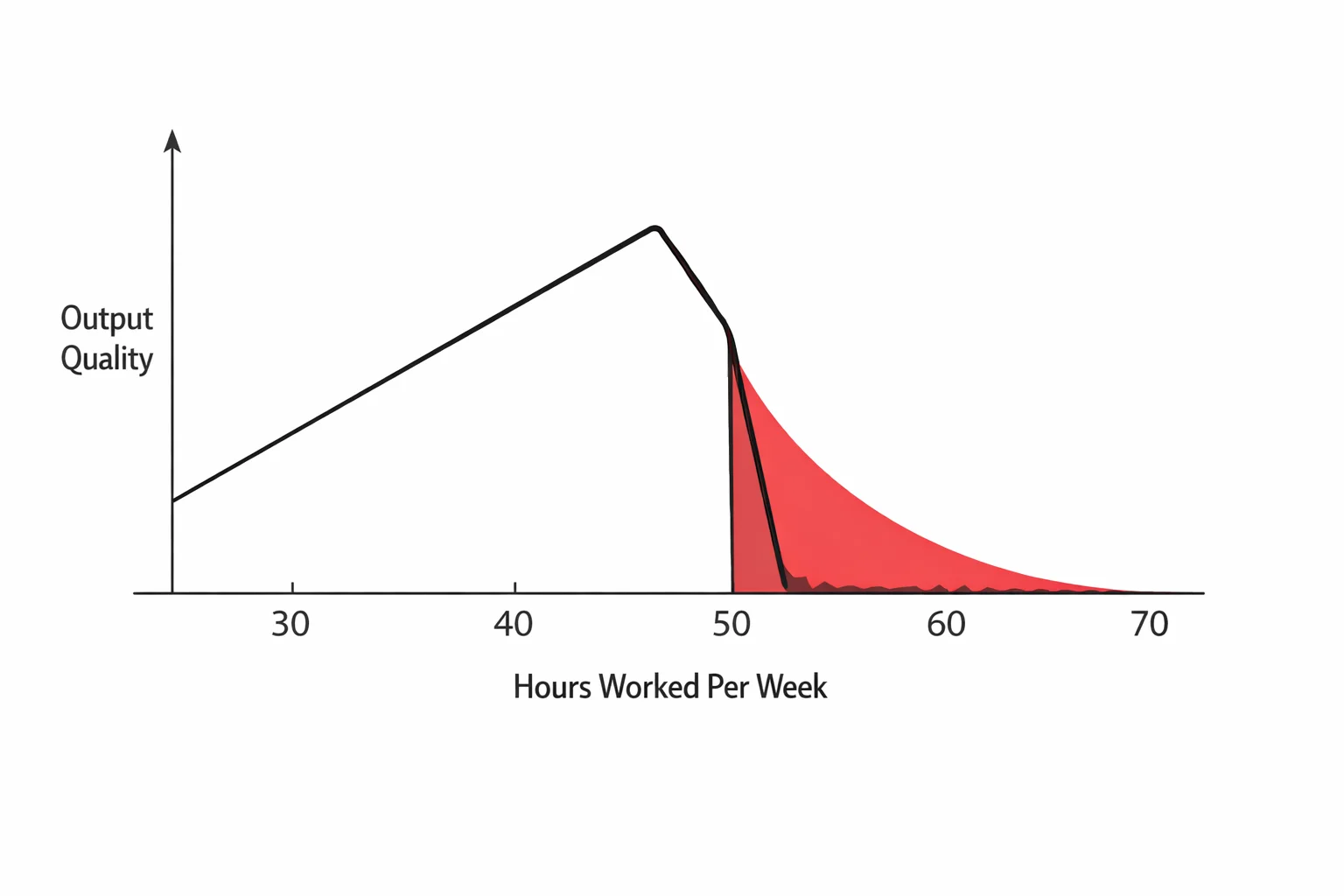
You’ve probably felt the drop, but you likely ignored it. It usually hits around hour forty or fifty of your workweek. You push past the standard forty, convinced that the extra time is where the real magic happens. But the data paints a brutal picture. You hit what researchers call the “productivity cliff.” Past this threshold, your output doesn’t just plateau; it nosedives. Error rates spike while the quality of your insights plummets. You aren’t extracting more value; you’re just generating noise that you’ll have to fix tomorrow.
I learned this the hard way. I once spent an entire weekend debugging a dataset, convinced that if I just stared at the numbers long enough, the error would reveal itself. I pushed through the fatigue, fueled by caffeine and anxiety. When I finally collapsed on Monday morning and looked at the code with fresh eyes, I saw it immediately: a simple typo. It was an error I would have caught in ten minutes on Friday if I had just stopped. Instead, I wasted sixteen hours proving a point that no one cared about.
This fatigue sets the stage for a greater problem: how you actually fill those long hours. You rarely just sit and think. You juggle. You check a notification, answer an email, then try to force your brain back into a complex data set. Every time you switch contexts, you pay a steep tax. Research from the University of California found that it takes an average of 23 minutes to fully recover your focus after an interruption. Professor Sophie Leroy calls this phenomenon “Attention Residue”—and it’s a killer. That isn’t just a number; that is nearly half an hour of deep thought leaking away every time Slack pings. If you switch tasks even a few times an hour, you spend your entire day in a state of cognitive recovery, never actually reaching the depth of thought required for breakthrough work.
The most terrifying part isn’t the lost afternoon; it’s the long-term biological cost. That low-level buzz of stress and urgency you carry? That is cortisol. When you keep your brain in a constant state of low-grade fight-or-flight, you are physically altering your neurology. Chronic exposure to high cortisol levels has been shown to shrink the hippocampus—the part of the brain responsible for memory and learning. For a researcher or academic, this is catastrophic. You are literally degrading the machinery you need to do your job. Effort has officially become the enemy of your results.
The Guilt Barrier and the Availability Illusion

You know the science. You understand the physiological limits. Yet, when the workday technically ends, you don’t pack up. Why? Because you are battling a formidable psychological blocker: the internal “hustle cop.” This voice lives rent-free in your head, constantly patrolling your behavior. It equates stillness with laziness and downtime with moral failing. It tells you that rest is for the weak, so you ignore your body’s signals and push past the cliff.
I remember the first time I tried to leave the office early. It was a Tuesday, around 4 PM. I had finished my critical tasks, but the sun was still high. As I walked toward the elevator, my heart raced. I was terrified the security guard would judge me, or that my colleagues would peek out of their offices to see the “slacker” leaving. It sounds irrational, but that fear is real. It keeps us at our desks long after our brains have checked out.
This internal guilt is amplified by the environment around you. In academia and rigid corporate structures, “face time” is often the currency of commitment. You look around and see peers logging hours just to be seen. The pressure to conform is intense. You fear that walking away to rest will be interpreted as a lack of dedication. You worry that while you are recharging, someone else is gaining ground. So, you perform “availability.” You keep your status green and your door open, not because you are producing value, but because you are terrified of being perceived as the one who doesn’t care.
This fear creates a powerful addiction to “fake urgency.” We use low-stakes tasks to soothe the guilt of stopping. We instinctively gravitate toward clearing an inbox or checking citation alerts because they offer a predictable dopamine hit. Answering ten trivial emails makes you feel like you’ve accomplished something. It feels productive. It feels safe. But deep thinking? That is scary. It is quiet, slow, and offers no immediate validation. We choose the illusion of being busy over the reality of being effective. We stay available to everyone else, rendering ourselves unavailable to the deep work that actually matters.
The Default Mode Network: Your Brain’s Secret Weapon
You’ve been taught that focus is everything. Keep your nose to the grindstone, push through the fatigue, and eventually, the answer will appear. That is how the “hustle cop” operates—it tells you that stepping away is quitting. But here is the inconvenient truth: sometimes, the only way to solve a complex problem is to stop trying to solve it.
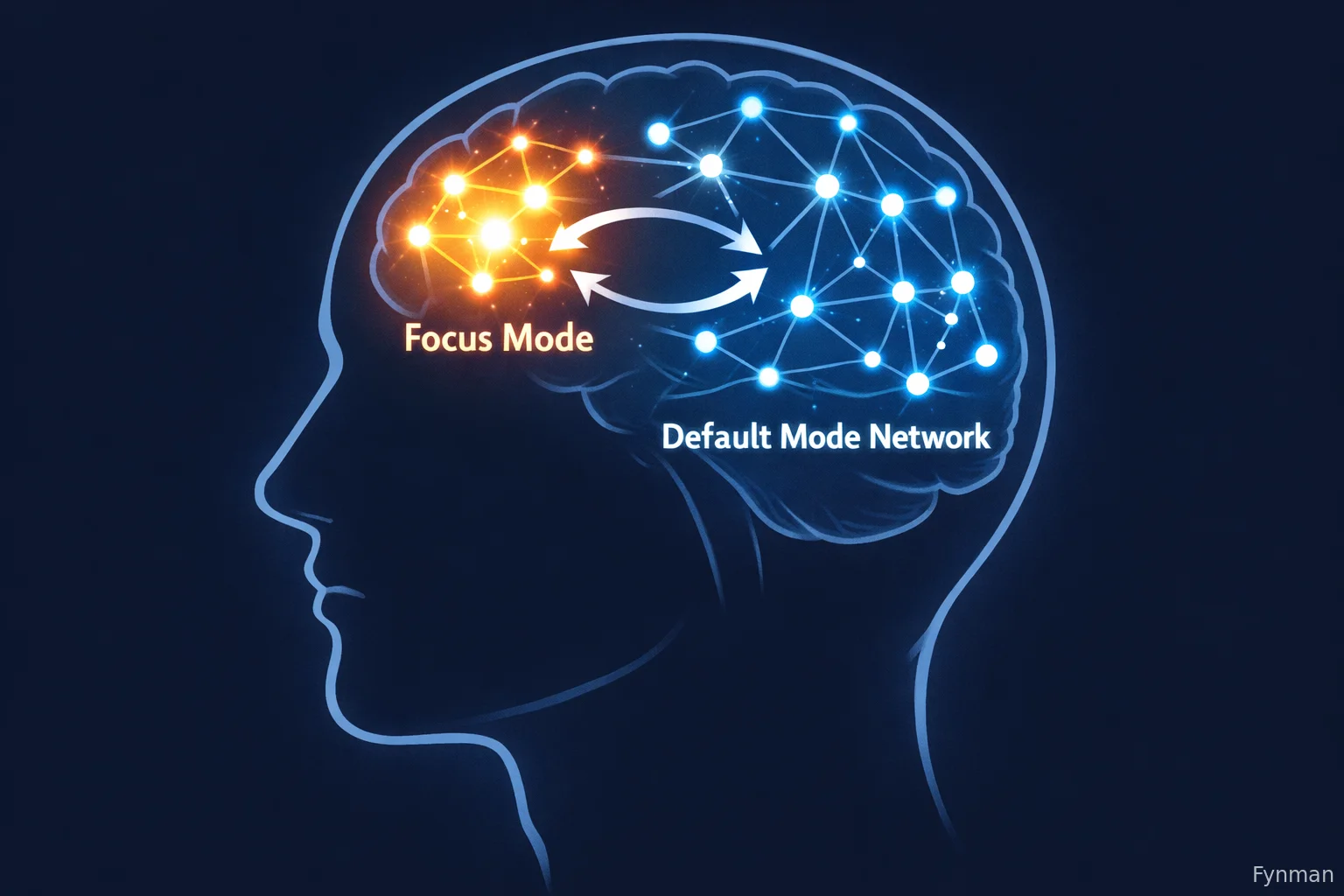
Neuroscience has a name for this phenomenon. It’s called the Default Mode Network (DMN). Think of it as your brain’s background processor. When you are actively focused on a task—reading, writing, analyzing—you are using your “Focus Mode.” But the moment you stop? The DMN clicks on. This network is responsible for connecting disparate ideas that your logical mind would never put together. This corresponds to the “incubation” phase of the Wallas model of creativity, a distinct biological process separate from mere daydreaming.
You’ve experienced this. You spend four hours banging your head against a research dead-end, getting nowhere. You give up in frustration and start chopping vegetables for dinner, and snap—the answer appears out of nowhere. It’s not magic. It’s the DMN doing the heavy lifting. It is processing data subconsciously, finding patterns in the noise you created while staring at the screen.
This fundamentally changes how you need to view your day. If you treat rest as a reward for a job well done, you will always deprioritize it because the work is never “done.” You need to reframe rest not as a luxury, but as a biological requirement for the synthesis phase of research. You are a knowledge worker. Your output isn’t widgets; it’s insights. And insights require incubation. If you don’t schedule time for your DMN to activate, you are just a tired person shuffling data around without ever actually understanding it.
Active vs. Passive Recovery: What Actually Recharges You
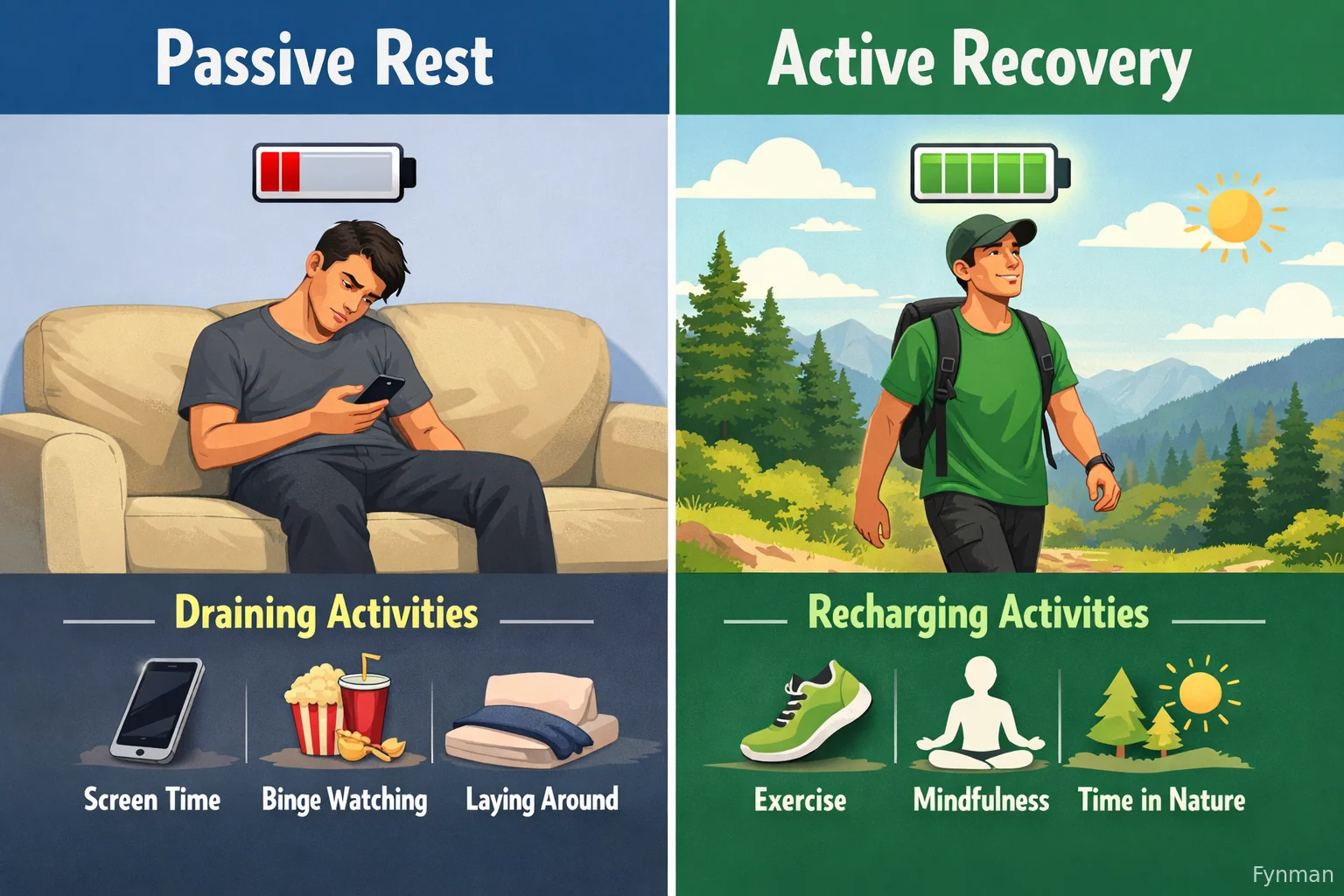
You know you need to let the Default Mode Network run, but here is where most of us get it wrong. We think crashing on the couch counts as recovery. It doesn’t. There is a massive difference between passive rest and active recovery, and confusing the two is why you still feel exhausted after a weekend of “relaxing.”
Passive rest—doom-scrolling through news feeds, refreshing the grant portal, binge-watching TV—is a biological trap. You aren’t resting; you are just consuming. Your brain is still processing massive amounts of low-quality information, which continues to drain your cognitive reserves. This is due to “cognitive load”—doom-scrolling keeps high-level processing resources active without ever achieving closure. You end the day sluggish and foggy, even though you haven’t moved a muscle.
Active recovery is different. It occupies your body or hands enough to disconnect from work, but leaves your mind free to wander. This is where the magic happens. Think walking without a podcast, cooking a meal from scratch, or lifting weights. You shift gears without stopping the engine. You give your brain a new problem to solve so it can subconsciously chew on the old one.
High performers don’t leave this to chance. They use “recovery rituals” to signal the transition. I personally sharpen my kitchen knives the moment I close my laptop. It’s tactile, repetitive, and signals to my brain that the analytical work is done. It’s a trigger: work is over, processing has begun.
It’s important to note that not every type of active recovery works for everyone. You need to experiment to find what specifically lowers your cortisol levels. For some, it’s running; for others, it’s painting. Don’t force a ritual that doesn’t fit.
To fix this immediately, run a “Recovery Audit.” List the five things you did last night to unwind. Next to each, mark a plus sign if you felt energized afterward or a minus sign if you felt more drained. Be ruthless. If “checking citation alerts” gets a minus, cut it out. If “reading fiction” gets a plus, schedule it. Most people waste their downtime on activities that actively deplete them. Stop trying to recharge by draining the battery further.
Conclusion: Permission to Pause
Stop counting hours. It’s a vanity metric that lies to you. If you sit at your desk for ten hours but only sustain deep focus for two, you didn’t work ten hours; you worked two and wasted eight. The shift we need to make is moving from “hours logged” to “energy managed.” When you view your day through battery management rather than time cards, the guilt evaporates. You realize that a rested, sharp four-hour session beats a zombie-like twelve-hour grind every time. You aren’t lazy for needing a break; you are inefficient if you don’t take one.
Efficiency is the new hustle. The badge of honor isn’t who suffers the longest; it’s who produces the best work with the least friction. Rest isn’t a reward you earn after you burn out. It is the literal engine of performance.
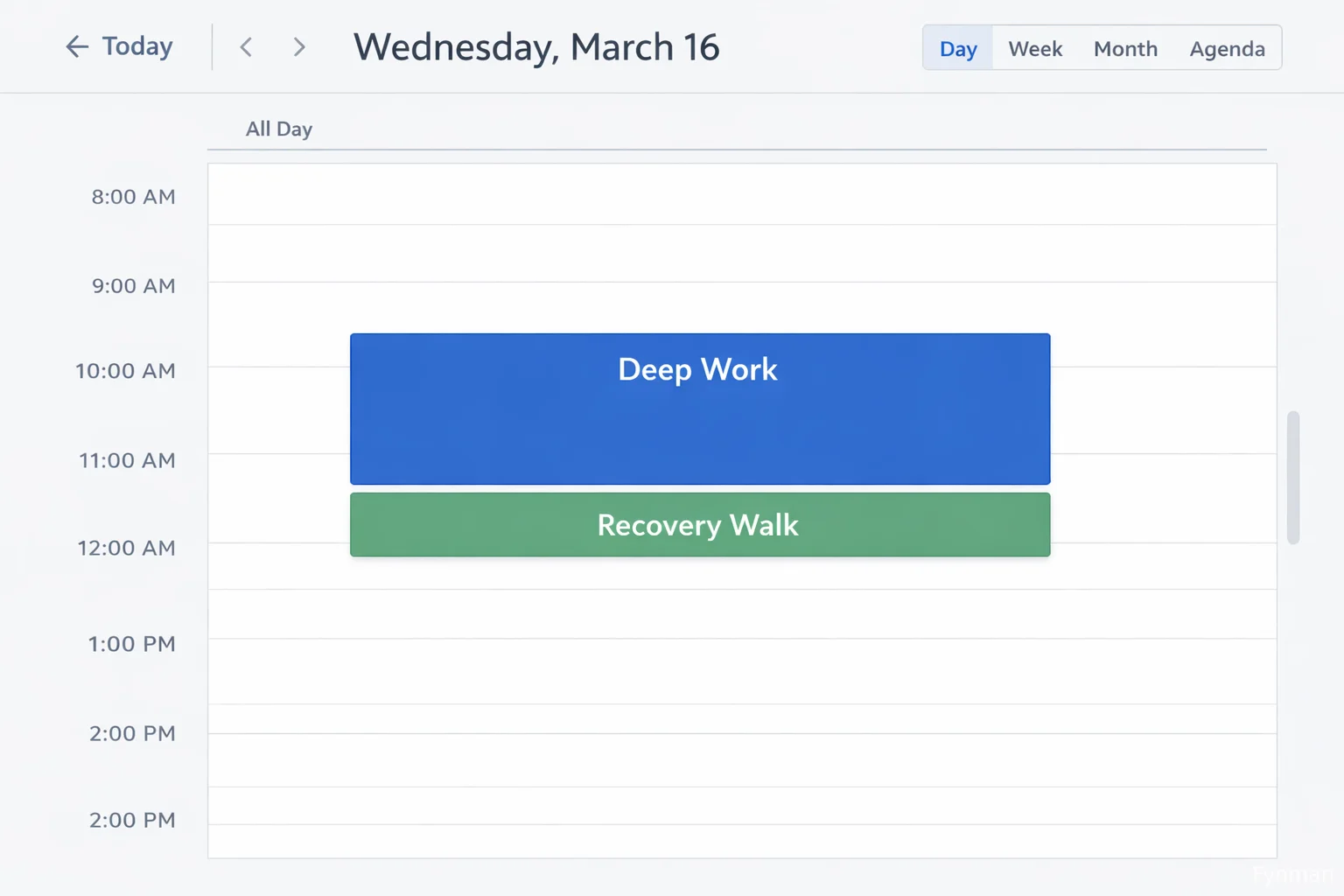
I challenge you to try one specific “soft productivity” tactic this week. Block out ninety minutes for your hardest task—phone in another room, notifications off. Go hard. Then, stop. A quick warning: sustaining 90 minutes of deep focus is a skill that takes time to build, much like a muscle. Don’t be surprised if you struggle to stay on track initially or feel the urge to check your phone. That is normal. This is where the magic happens. Do not “coast” by checking Slack or “relax” by doom-scrolling news. Actually disconnect. Go for a walk without a podcast, wash the dishes by hand, or sit and stare at a tree. This isn’t wasting time; it is letting your brain’s background processes catch up and integrate the work you just did. Give yourself permission to pause. Your best work is waiting on the other side of the disconnect.
FAQ
Research indicates a "productivity cliff" around 40 hours where error rates spike and insights plummet. Pushing through fatigue generates noise rather than value, degrading the cognitive machinery needed for high-level work.
It takes an average of 23 minutes to fully recover focus after an interruption due to "attention residue." Constantly switching tasks keeps your brain in a state of recovery, preventing the depth required for breakthrough insights.
Passive rest, like doom-scrolling, drains cognitive reserves by processing information. Active recovery, such as walking or cooking, occupies the body while allowing the mind to wander and recharge effectively.
The Default Mode Network acts as a background processor that activates during rest to connect disparate ideas. By stepping away from focus mode, you allow your brain to synthesize data and solve problems subconsciously.