Retroactive Jealousy: An Evidence-Based Framework
TL;DR - Key Takeaways
- Retroactive jealousy is an obsessive preoccupation with a partner’s past romantic history driven by intrusive thoughts and repetitive mental movie loops.
- Reassurance-seeking behaviors provide temporary relief but reinforce long-term obsession by preventing the disconfirmation of feared scenarios.
- Research demonstrates that obsessive symptom severity directly predicts heightened carefulness and physiological strain during reassurance-seeking interactions.
- Introducing cognitive friction by physically pausing and naming mental loops helps break the cycle of late-night rumination and exhaustion.
Introduction
You just finished something. The report is written, or the conversation ended hours ago. Then the doubt floods in, pulling you back through old timelines to search for proof you missed something. Retroactive jealousy is an obsessive preoccupation with a partner’s romantic or sexual history, driven by intrusive thoughts and mental movie loops about past timelines. Most relationship guides dismiss this as simple insecurity, ignoring how impossible those commands feel when you are trapped in an active cognitive loop.
Beyond Normal Insecurity: Mapping the Anatomy of Retroactive Jealousy

Curiosity about a partner’s past is normal - a thought you notice and let pass. When that question drills into a nightly loop that reruns regardless of how many times you mentally replay it, you are dealing with structured rumination and its own cognitive machinery.
What turns a passing worry into a loop? Dysfunctional beliefs around perfectionism and the need for absolute certainty hijack the brain’s threat detection system. Decades of OCD research identify inflated responsibility and maladaptive beliefs about controlling thoughts as the cognitive drivers that sustain the pattern.
As outlined in a transdiagnostic review on DergiPark by Burak Uğuz, maladaptive coping strategies across anxiety and obsessive-compulsive disorders are driven by shared mechanisms including threat appraisal biases, intolerance of uncertainty, and perseverative cognition.
No online assessment can diagnose an underlying condition. Distinguishing ordinary curiosity from an entrenched cognitive loop requires honest self-reflection - the label matters less than whether the pattern actually interferes with your life.
The Cognitive Anatomy of the Mental Movie Loop
The brain auto-generates vivid imagined scenarios of a partner’s past interactions, treating a memory or hypothesis as an urgent threat requiring mental neutralization.
Drawing on Salkovskis’ cognitive-behavioral model of obsessive-compulsive patterns, intrusive thoughts trigger attempts to put things right through covert mental rituals and checking behaviors.
As detailed in the conceptual diagram of the projection cycle, attempting to solve the imaginary scenario reinforces the perceived probability of a feared event rather than resolving it.
The Reassurance-Seeking Trap: Short-Term Dopamine, Long-Term Obsession

The relief lasts about as long as it takes your partner to finish answering, and that temporary calm is the hook of a neutralization behavior that reduces anxiety momentarily while preventing the disconfirmation of the feared scenario.
As Starr, Santee, and Huang note in their 2023 APA PsycNET chapter, interpersonal dependency fuels this reassurance cycle, though the treatment literature remains thin due to funding shifts toward neurobiological targets.
What a 2020 BMC Psychiatry study of 53 OCD patients and 591 non-clinical participants found is that the intensity of reassurance seeking predicts guilt while careful interrogation predicts anger rather than relief.
Each round passes responsibility to your partner temporarily but never tests the core belief driving the loop, so the doubt returns heavier and the next request feels more urgent.
Digital Stalking Triggers and the Somatic Toll of Late-Night Scrolling
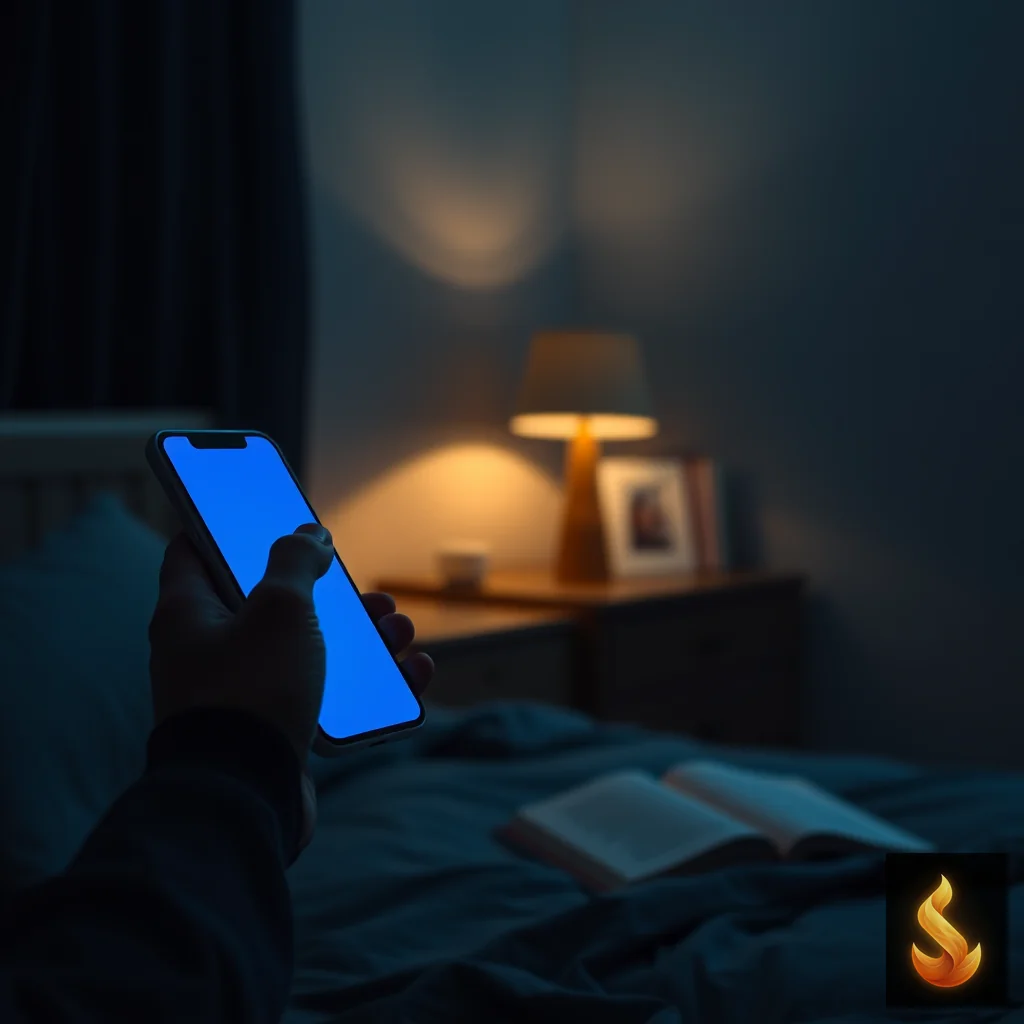
Late-night digital deep dives into social media archives act as high-frequency triggers that hijack nervous system regulation and prolong obsessive rumination.
As detailed in Occupational Health Science, a diary study of 269 employees across 1,256 data points demonstrated that rapid message-based communication pressure contributes to resource-draining affective rumination across boundary-crossing contexts.
Teams that handle digital communication friction report that the physical exhaustion of scrolling past timestamped photos at 2:00 AM leaves the body in a sustained fight-or-flight activation loop.
When you stay connected across blurred boundaries, your brain keeps searching for an anchor that does not exist in the feed.
Evaluating the Divide: Genuine Boundary Discomfort Versus Pure Rumination

Before diving into the core distinction, reviewing how these patterns operate helps clarify your mental state.
You need a way to figure out if that tightness in your chest is a real warning sign about current behavior or just another ghost from an old mental script.
When you look closely at what triggers you, a genuine boundary focuses on present actions and shared values that affect your life today.
Historical rumination feeds entirely on things that happened years ago and cannot be changed, keeping you trapped in an internal loop instead of dealing with what is right in front of you.
Noticing this difference helps you stop testing your partner with indirect questions and lets you break free from passive withdrawal before exhaustion takes over completely.
The Cognitive Friction Technique: Interrupting Involuntary Projections
When your mind starts playing those unauthorized archival scenes, trying to force them away usually backfires because direct thought suppression only makes the target memory bounce back louder.
Instead of fighting the mental movie, you introduce deliberate cognitive friction by physically pausing and naming the exact loop out loud to disrupt the automatic neural pathway.
This deliberate speed bump gives your nervous system enough breathing room to step out of the reactive loop without needing to investigate every phantom detail.
It feels awkward and uncomfortable at first because your brain demands a resolution to the manufactured crisis, but withholding that mental compulsion starves the loop of its required fuel.
Understanding the Research Limits: What the Evidence Does Not Establish
As published in SpringerLink, a 2020 study by researchers examining 53 obsessive-compulsive disorder patients and 591 non-clinical participants found that symptom severity significantly predicted a patient’s carefulness during reassurance seeking.
Recognizing the strict boundaries of these academic findings prevents stretching clinical data to cover everyday relationship doubts.
Academic investigations into obsessive-compulsive traits typically focus on specific clinical cohorts rather than general relationship dynamics.
Keeping your expectations realistic helps you map your own cognitive patterns without misinterpreting the scope of available scientific literature.
Mapping Your Rumination Patterns: A Self-Assessment Framework

You start by answering a private questionnaire, wondering if your personal patterns mirror the clinical scales therapists use like GAD-7 and PHQ-9. Operators who deal with these cognitive habits know how quickly tracking symptoms brings hidden vulnerabilities into plain view.
You keep complete control over your private inputs since no personal data is collected or stored on remote servers. You can map your exact triggers without worrying about exposure, letting you evaluate whether threat estimation or perfectionism fuels your specific loops.
Take the Rumination Pattern Assessment to clarify where your mental energy goes.
Conclusion
Breaking the cycle of retroactive jealousy takes consistent practice and a clear understanding of your cognitive triggers. When you stop feeding mental movie loops with late - night searches and endless questioning, your nervous system finally gets the chance to reset.
The quiet you build comes from sitting with uncertainty rather than fighting it, letting you focus on the life you are sharing right now.
Frequently Asked Questions
Retroactive jealousy is an obsessive preoccupation with a partner's past romantic or sexual history, driven by intrusive thoughts and involuntary mental movie loops about prior timelines. Unlike ordinary curiosity, these thoughts trigger an urgent psychological need for certainty that persists regardless of how many times the mental scenario is replayed.
Retroactive jealousy OCD describes an obsessive-compulsive pattern where intrusive thoughts about a partner's history function identically to clinical obsessions, prompting compulsive mental checking and reassurance seeking. As published in SpringerLink, a 2020 study of 53 obsessive-compulsive disorder patients and 591 non-clinical participants found that symptom severity significantly predicted a patient's carefulness during reassurance seeking (beta = .53, p < .001).
Overcoming retroactive jealousy involves identifying dysfunctional beliefs around perfectionism and threat estimation while breaking the reassurance-seeking cycle. Rather than attempting to suppress intrusive thoughts, introducing deliberate cognitive friction by pausing and naming the mental loop out loud disrupts the automatic neural pathway.
Dealing with a partner experiencing retroactive jealousy requires recognizing that providing verbal reassurance offers only short-term dopamine relief while reinforcing long-term obsession. Halldorsson and Salkovskis noted that excessive reassurance seeking frequently creates relationship friction, frustration, and feelings of exhaustion for both partners.
Curiosity about a partner's past is entirely normal, but persistent obsessive rumination and mental movie loops cross the line from healthy interest into an entrenched cognitive habit. Recognizing the boundary between ordinary curiosity and structured rumination helps you evaluate whether past timelines are interfering with your present relationship.
Jealousy about a partner's past is often sustained by cognitive vulnerability factors such as inflated responsibility, perfectionism, and an intolerance of uncertainty. As outlined in a 2026 transdiagnostic review published on DergiPark, maladaptive coping strategies across anxiety and obsessive-compulsive disorders are driven by shared mechanisms including threat appraisal biases, intolerance of uncertainty, and perseverative cognition.
Retroactive jealousy itself is a painful psychological pattern rooted in anxiety rather than a malicious or toxic character trait. However, when unmanaged behaviors such as digital stalking, constant interrogation, and indirect testing push partners away, the resulting dynamic can severely damage relationship trust.
Late-night digital deep dives into social media archives and message-based communication pressures act as high-frequency triggers that hijack nervous system regulation. As detailed in Occupational Health Science, a diary study of 269 employees across 1,256 data points demonstrated that rapid message-based communication pressure contributes to resource-draining affective rumination across boundary-crossing contexts.
Stopping the cycle of obsessive thinking requires withholding the mental compulsions and checking behaviors that feed the loop. By accepting uncertainty and sitting with the discomfort rather than investigating phantom details, the nervous system gradually resets its baseline threat response.
Self-assessment frameworks structured around clinical psychology scales allow you to evaluate your cognitive loops in complete privacy. Because your data stays entirely on your device and is never stored on remote servers, you can track your exact triggers without worrying about exposure.
 how to stop jealousy in relationships: An Evidence-Based Decision Framework
 Is It Jealousy? An Evidence-Based Framework for the Over-Analyzing Partner
 Do I Need Therapy for Jealousy? An Evidence-Based Decision Framework for Skeptics
 Anxious Attachment Style: Signs You Overthink Every Relationship
 Do I Have Anxiety Quiz: Take the Free 5-Minute Evaluation
 Workplace Jealousy: Is It Sabotaging Your Career? Take the Jealousy Test