Do I Need Therapy for Anxiety? Take This 5-Minute Assessment
Introduction
You hit your deadlines. You make it to the gym. On paper, you are functioning perfectly, but the mental bandwidth required to maintain that facade is draining your battery dry. This creates a cognitive dissonance - a psychological tension between your external reality and your internal experience. If you are actually performing well, why does every small decision feel like a tactical maneuver? You might be stuck in a loop of rationalizing your symptoms as just “stress” while secretly fearing the problem runs deeper. It is the classic High-Functioning Skeptic dilemma. You want data before you commit to a therapist or admit to a crisis. You are not looking for a vague label or a personality quiz. You need a clear, clinical baseline to distinguish between temporary burnout and something that requires professional support. To bridge the gap between privacy and clinical insight, we built the “Do I Need Therapy for Anxiety?” assessment using standardized clinical frameworks to give you that objective evidence without the pressure of a clinical commitment.
The Sunday Scaries Paradox: Why You Can’t Relax When You’re Winning
It is Sunday evening. You hit every deadline last week. You cleared your inbox and even made it to the gym three times. On paper, you won. But instead of relief, your chest is tight. You are physically sitting on the couch, but mentally you are rehearsing next Tuesday’s meeting. This is the Sunday Scaries paradox. You are externally successful, yet internally you are on high alert.
You might rationalize this as normal stress because you have valid reasons to be busy. But high-functioning anxiety is indifferent to your external success. It is driven by the threat of losing, not the satisfaction of winning. That background noise of worry is not a fleeting mood or a bad attitude. It is a physiological state where your nervous system refuses to downshift. It feels like a low-frequency hum you cannot turn off, draining your battery even while you are plugged into the charger.
This is not standard exhaustion. It is hypervigilance disguised as productivity. You are not imagining the dissonance. The gap between your performance and your internal experience is exactly where the fatigue lives. Your brain is treating downtime like a tactical error, leaving you exhausted before the week even begins. It feels like you are sprinting while carrying a weighted vest that you are not allowed to take off, even when the race is clearly over.
The Nash Equilibrium of Your Nervous System
Your nervous system has settled into a Nash Equilibrium. In game theory, this is a stable state where no player benefits from changing their strategy, even if the collective outcome is objectively terrible.
You are trapped in a losing strategy. The massive energy expenditure required to maintain your facade vastly outweighs the performance payoff, yet you keep grinding because stopping feels like a risk. To your brain, attempting to lower your defenses looks like inviting chaos, so you choose the devil you know. You double down on hypervigilance to stay “safe,” accepting exhaustion as the cost of doing business.
Biologically, this equilibrium locks your body in a sympathetic state. Your system refuses to drop into a parasympathetic rest mode. Instead, it pumps cortisol and adrenaline even when you are physically still, treating a quiet Sunday afternoon with the same urgency as a looming deadline. This is the hidden mechanism of “high-functioning” anxiety. You look calm on the outside, but internally, your engine is redlining in neutral.
Think of your mental energy as a finite resource. High-functioning anxiety acts like a background process you cannot close, silently draining your RAM until the entire system lags. Simple tasks feel expensive because your processing power is already occupied by the worry loop. You are not suffering from a character flaw or a sudden lack of discipline. You are simply managing a heavy, complex operating system on a battery that has been depleted by a silent, constant loop.
The Cognitive Leak: Why Working Harder Feels Like Treading Water

You think the fix is a sharper time-blocking strategy or a stricter deadline. You are optimizing for output while ignoring the leak in the hull. When your nervous system is stuck in high alert, a significant chunk of your working memory is diverted to threat monitoring. It is not just “stress”; it is a resource-intensive background process you cannot close. Simple tasks take twice as long because your brain is constantly checking for nonexistent threats.
The World Health Organization and the International Labour Organization estimate 12 billion workdays are lost annually to depression and anxiety. That macro figure is just the aggregate of your micro leak. You are expending maximum effort for diminishing returns.
This creates a specific, maddening friction. You push harder, grinding through the mental fog, but your return on investment collapses. You try to brute-force your way through complex tasks, but your brain lacks the free RAM to process the nuance. You are trying to solve a software problem with a hammer. Logic cannot patch a biological failure mode. You cannot think your way out of a fight-or-flight response any more than you can calm a screaming baby by explaining the physics of sound.
This is where the High-Functioning Skeptic hits the wall. You blame your discipline. You blame your sleep schedule. You rarely blame the mechanism itself. But if the engine is misfiring, stepping on the gas won’t help. You just burn fuel faster and wonder why you aren’t moving.
The “Just Stress” Defense Mechanism
You rationalize your anxiety because you have the data to back it up. Your brain weaponizes logic to protect you from the vulnerability of admitting you might need help. You tell yourself, “I have a valid reason to be stressed,” and that statement is technically true, but functionally false. This is the “Just Stress” defense mechanism.
High-functioning skeptics excel at logical problem-solving. You fix the external crisis, like hitting a deadline or resolving a conflict, so you expect the internal distress to evaporate with it. It doesn’t. Solving the problem changes your environment, but it does not reset your nervous system. You confuse managing your calendar with processing your emotions.
Being intelligent actually makes you better at this denial. Your cognitive toolkit allows you to construct watertight arguments for why your suffering is a necessary byproduct of a high-performance life. You aren’t lying to yourself; you are just applying the wrong tool to the job. You use logic to dissect the situation rather than feeling the impact of it. This keeps you functional, but it keeps you trapped in a loop where the only acceptable cure is “working harder,” even when that is exactly what is draining you. You solve the math problem, but you ignore the crying person holding the pencil.
The 10-Year Delay: The Compound Interest of Untreated Anxiety
You believe you are buying time by waiting for the “right” moment to address your mental state, but the data suggests you are simply accruing debt. Research from the World Mental Health Surveys indicates that the median delay between the onset of anxiety disorders and receiving treatment is often nearly a decade. That is ten years of your brain effectively training itself to operate on high alert.
This is not just a metaphorical drain. Chronic anxiety physically remodels your neural architecture through a process called long-term potentiation. Essentially, the neurons that fire together, wire together. By constantly engaging with the “background noise” of worry, you are physically strengthening the circuits responsible for fear while letting the pathways associated with rest and executive function atrophy. You are biologically optimizing your hardware for a threat that exists mostly in your head.
The DSM-5, the standard classification of mental disorders used by clinicians, typically marks a disorder when symptoms like excessive worry and restlessness persist for more than six months. Waiting longer does not prove resilience; it allows that neural remodeling to solidify. This mechanism explains why your fear that “the problem is bigger than expected” is a self-fulfilling prophecy. The problem genuinely becomes bigger because your brain has changed its structure to accommodate the stress, making the reaction automatic rather than situational.
Early intervention is not about admitting weakness. It is a strategic resource allocation decision. You stop the leak now so you do not have to rebuild the entire foundation later. You would not ignore a ticking noise in your engine for a decade. Your mental machinery deserves the same logic.
The Smoke Detector vs. The Fire Alarm
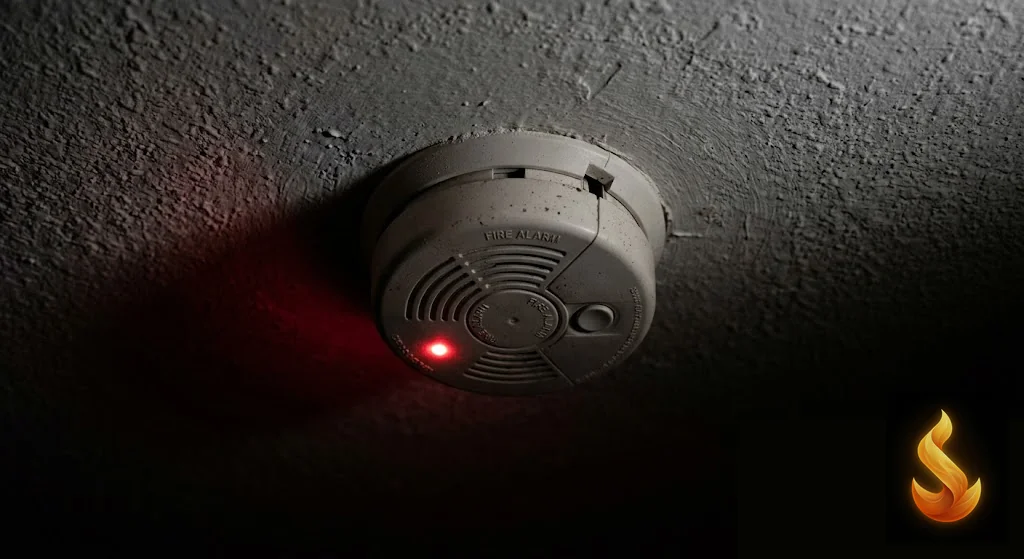
Think of your nervous system as a building’s security setup. Stress is a fire alarm. It is loud, jarring, and impossible to ignore, but it serves a specific function. There is an actual threat in the building. Once you address the danger, the alarm stops. The noise is proportional to the immediate reality.
Clinical anxiety is something else entirely. It is not an alarm; it is a broken smoke detector with a dying battery. It chirps intermittently in the dead of night, piercing the silence, even when there is no smoke, no heat, and no danger. The signal is a false positive, but the physiological toll on your body is absolutely real.
The confusion often sets in because the internal sensation feels identical. Your heart races, your chest tightens, and your mind frantically scans for the threat. The defining factor for clinical anxiety is the lack of an external trigger combined with the duration of the signal. If that buzzing background noise has persisted for more than six months without a specific fire to fight, you are not dealing with a temporary crisis. You are dealing with a malfunctioning system.
Everyone experiences stress when the house is actually burning. Not everyone lives in a state of anticipatory dread waiting for a spark that never comes. You are not broken because you feel this; you are stuck in a loop where the hardware cannot distinguish between a real crisis and a shadow. Recognizing which system is running in your head is the only way to know if you need a fire extinguisher or a repairman.
Diagnosis vs. Data: Why “Labeling” Is a Fear Worth Examining
You guard your autonomy, and the idea of a “diagnosis” feels less like help and more like a permanent record you did not sign up for. It is a rational fear. A medical diagnosis is an administrative event. It enters your medical history, potentially impacts future insurance coverage, and effectively tags you within a complex healthcare system. Once that label is applied, it risks shifting from a helpful description of symptoms to a stifling identity.
But a clinical self-assessment is not a diagnosis. It is strictly data.
The distinction lies entirely in ownership. A diagnosis is a determination made by a provider. A self-assessment is a metric you generate for yourself. It functions like checking your own engine light, not a mechanic writing a work order. You are gathering objective evidence about your current state to see if your internal machinery is operating correctly. You are not inviting a bureaucracy into your life yet. This process is designed to be anonymous.
Your data stays with you. We do not collect or store it. The assessment runs in your browser, meaning your responses never leave your device. There is no profile being built in the background, no risk of a data breach exposing your private struggle to an employer or insurer. You get the objective evidence you need to distinguish between a bad week and a clinical condition, but the authority to decide what to do with that information remains entirely in your hands.
The Objective Tie-Breaker: Why You Need External Data

You cannot calibrate the instrument with itself. When you are deep in the fog of high-functioning anxiety, your internal gauge is distorted by the very pressure you are trying to measure. You are likely oscillating between “I am just tired” and “I am losing control,” but you lack the altitude to see the difference. Introspection alone is a biased metric; we are notoriously bad at judging our own mental state accurately because our brains are excellent at rationalizing symptoms to maintain the status quo. If you are intelligent, you are likely even better at constructing a logical defense for why you don’t need help.
You need an objective tie-breaker. You need data that exists outside your own internal narrative to settle the debate between “normal stress” and “clinical pathology.” A standardized clinical framework serves this exact purpose. It acts as an external mirror, reflecting your reality back to you without the filters of your own skepticism or denial.
Using a validated assessment tool provides a low-stakes way to validate your experience before you commit to higher-cost actions like booking a therapist. It is an efficiency tool for your brain. Instead of spending weeks in an internal loop wondering if you are imagining things, you get a definitive data point. The assessment questions are not vague inquiries; they are specific check-ins on function and frequency that bypass your storytelling. It moves the conversation from a vague feeling of unease to a concrete set of metrics. It transforms “I feel like I’m falling apart” into “My responses indicate sustained distress patterns.” That shift from subjective feeling to objective fact is what allows a rational mind to stop arguing and start solving.
Inside the Scale: Why Clinicians Trust GAD-7 Over Pop Psychology
You are right to be suspicious of most online quizzes. They are usually designed for engagement, not accuracy, often serving as clickbait rather than valid medical tools. But the Generalized Anxiety Disorder 7-item scale (GAD-7) is different. It is not a personality test. It is a rigorously tested clinical instrument developed by Dr. Robert Spitzer and colleagues in 2006, and it remains a widely used clinical tool in primary care offices worldwide to measure anxiety severity.
The difference is in the validation data. When researchers assess this tool, they look at sensitivity and specificity - metrics that determine if a test actually works. The GAD-7 consistently demonstrates around 89% sensitivity Archives of Internal Medicine. In plain English, if you actually have clinical anxiety, this tool will correctly identify it nearly nine times out of ten. It offers the kind of statistical reliability that a generic magazine quiz simply cannot provide.
The real power of the GAD-7 lies in its specific mechanism. Pop psychology typically asks if you “feel stressed.” That is too binary for a high-functioning adult. The GAD-7 asks how many days over the last two weeks you have been unable to stop worrying or found yourself feeling restless. It measures functional impairment. It does not just care that you feel nervous; it cares that your nervousness interrupted your work, made it hard to sit still, or prevented you from enjoying your downtime.
This focus on functional impairment is crucial. You might not be having a panic attack in a meeting, but if your worry is constantly eroding your focus or keeping you awake, the scale captures that. By quantifying the frequency and the specific impact on your daily function, the scale aligns perfectly with how clinicians distinguish between a temporary rough patch and a disorder that requires treatment. It uses the same clinical frameworks therapists use, giving you the objective metric you need to trust your own instincts and make a data-driven decision about your care.
The 5-Minute Protocol: How Clinical Questions Reveal Hidden Patterns
You have seen the data on why clinicians trust the GAD-7, but the real insight comes from how the questions are actually structured. This is not a personality quiz asking if you prefer beaches over mountains. The protocol asks about frequency over the last two weeks. This specific window is the industry standard for a reason. It removes the noise of a single bad day or a single good morning. You are not reporting a momentary feeling. You are identifying a pattern. Did the worry happen more than half the days? Was the restlessness nearly constant?
This focus on frequency separates normal stress from clinical anxiety. Stress is usually acute and tied to a specific event, like a deadline. Clinical anxiety is the background hum that persists regardless of your external reality. By forcing you to look at a 14-day rolling average, the assessment cuts through your rationalizations. You cannot logic your way out of “every day.” The pattern becomes undeniable when you quantify it.
It also goes beyond intensity. Most people think anxiety means a panic attack. The assessment digs into the specific nature of your distress. It separates the cognitive load - uncontrollable worry - from the physical symptoms like feeling keyed up, on edge, or becoming easily annoyed. It even looks at functional impairment, asking if you found it hard to relax or sit still. This distinction provides root-cause clarity. It shows you exactly how the issue manifests in your system, whether it is your mind racing or your body unable to settle.
Data accuracy is critical here. Self-reporting has limitations. If you take this on a particularly difficult day, you might inflate your score. If you take it after a rare moment of relief, you might minimize it. That is human nature. But the two-week reference point forces you to zoom out. It is not about how you feel right this second. It is about the trend line of your recent history. The goal is not to catch you in a moment of weakness. It is to reveal the baseline you have been living with so you can stop guessing.
Reading Your Result: A Compass, Not a Verdict
You see the score and the immediate impulse is to judge yourself. Is this a verdict on your character? It is not. Think of this result as a coordinate, not a gavel. It offers direction rather than a final judgment on your mental health.
Here is the hard truth we have to be clear about: an assessment can’t diagnose anything. It is a screening tool, not a clinical evaluation. What it does provide is a data point to measure your internal state against standardized norms. You have likely spent months rationalizing your symptoms as temporary or manageable. This score cuts through that noise. If the number is high, it confirms that the fatigue you feel is not a failure of willpower, but a physiological reality.
Your score will fall into four actionable buckets. Minimal anxiety suggests your distress is within the typical range of human experience, a normal reaction to life’s ebb and flow. Mild implies some background noise that might respond well to specific lifestyle adjustments like better sleep hygiene or mindfulness. Moderate indicates that your current coping mechanisms are straining under the load and a structured approach could help. Severe signals that your nervous system is overwhelmed and likely needs more support than self-management can safely provide.
Use the result to calibrate your next move. If the coordinates point toward higher distress, it validates the need for professional support without the ambiguity of “just stress.” This is not about labeling you as broken. It is about giving you the specific location to start navigating back to your baseline. Trust the data, not the fear.
Conclusion
You have spent enough energy managing the noise while pretending it doesn’t exist. That internal debate is expensive, and it is getting you nowhere. You now have the distinction between a fire alarm and a broken smoke detector, but you still need the coordinates to navigate your way out. This assessment is your objective tie-breaker. It cuts through the rationalization and gives you a clinical baseline without the pressure of a medical label.
It takes five minutes to check the gauge. Your data stays with you. We do not store it. You get the evidence you need to either validate your instincts or rule out the clinical fear. Stop guessing. Check the gauge. If the needle points to distress, you will know it isn’t a failure of willpower. It is a physiological reality you can finally address. Trust the data, not the fear.
Frequently Asked Questions
Stress typically ties to a specific deadline or event and fades when the crisis ends. Clinical anxiety persists as a background hum for six months or more, regardless of your external reality or success.
No, an online assessment provides data, not a diagnosis. It functions like checking your own engine light to validate your experience and help you decide if professional support is the next step.
High-functioning anxiety is driven by the threat of losing, not the satisfaction of winning. Your nervous system treats downtime like a tactical error, keeping you stuck in a state of hypervigilance even when you are safe.
Yes, your data stays with you. The assessment runs locally in your browser, meaning your responses are never stored on a server or sent to a third party, ensuring complete privacy.
 When Self-Reliance Becomes Exhaustion: An Evidence-Based Guide to Therapy Readiness
 Do I Need Therapy for Depression? Take This 5-Minute Assessment
 Does Therapy Actually Work? An Evidence-Based Framework
 Anxiety or Something Else? Why Self-Diagnosis Goes Wrong
 What Type of Therapy Do You Need for Burnout? An Evidence-Based Framework
 Therapy vs Self-Help for Burnout: An Evidence-Based Decision Framework for Skeptics