Anxious Preoccupied Attachment Style vs. Anxious Attachment
TL;DR - Key Takeaways
- Anxious attachment is a broad term for relationship insecurity, while anxious-preoccupied is a specific clinical quadrant defined by a negative model of self and positive model of others.
- Hyperactivating strategies drive compulsive behaviors like re-reading chat logs and fixating on delayed text replies as survival mechanisms against perceived abandonment.
- Meta-analytic research reviewed in Brain Sciences by Or Dagan and colleagues demonstrates that preoccupied attachment patterns correlate with elevated internalizing symptom scores.
- Adult attachment styles are not permanent traits; they demonstrate plasticity and earned security through the development of internal emotional regulation.
Introduction
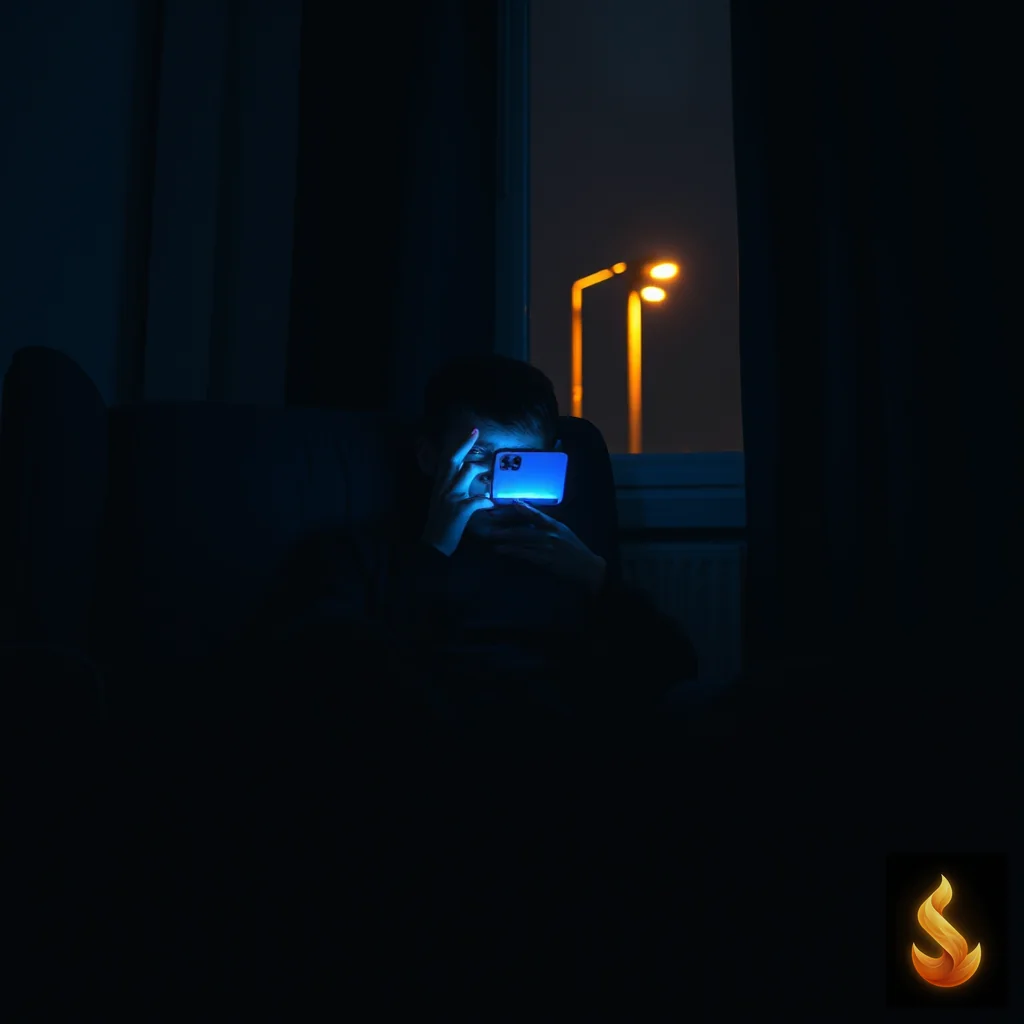
You just finished typing a text message, waiting by the phone with a sense of dread as the hours tick by without a reply.
Anxious attachment is a broad umbrella term describing general relationship insecurity, while anxious-preoccupied is a specific structural quadrant defined by Bartholomew and Horowitz’s four-category model.
This article examines the historical taxonomy, cognitive mechanisms, and empirical research to distinguish general relationship anxiety from the specific preoccupied subtype.
Taxonomy of Adult Attachment: Moving Beyond Broad Labels
As detailed in research from Murray State’s Digital Commons by Kayla Kemper and Lillian Jones, an ongoing study with a sample size of 82 college students is examining the relationship between adult attachment styles and communication quality.
This framework organizes adult attachment around your views of yourself and others, dividing responses into four distinct quadrants rather than treating relationship distress as a single flat category.
When you hear casual conversations grouping every worry under the umbrella of anxious attachment, you miss the structural differences that separate general insecurity from the specific preoccupied quadrant.
Anxious Attachment vs. Anxious-Preoccupied: The Structural Distinction
As reviewed by Or Dagan and colleagues in Brain Sciences, the preoccupied subtype locks onto a negative model of self paired with a positive model of others.
This mental map treats your partner as inherently secure while you view yourself as fundamentally inadequate, creating a relentless hunger for reassurance.
This exact internal split explains why general relationship worry feels manageable one day and crippling the next.
You assume the other person holds all the emotional stability, leaving you scrambling to catch up to their perceived standard.
Contrasting Subtypes: Preoccupied, Dismissing, and Fearful-Avoidant
While dismissing individuals rely on deactivating strategies to suppress negative feelings and maintain distance, you find yourself doing the exact opposite.
You lean straight into the storm, letting every micro-expression and sudden shift in tone consume your thoughts.
Fearful-avoidant profiles complicate this further by swinging wildly between craving closeness and panicking at the thought of rejection, creating a stark contrast against your own single-minded drive for constant reassurance.
Hyperactivating Strategies: How the Preoccupied Mind Loops on Rejection Cues
When you find yourself scrolling through old chat logs to hunt for hidden rejection cues, your mind is running on hyperactivating strategies rather than dealing with a personal failure.
This constant scanning turns every delayed reply into a silent crisis where you draft and delete responses multiple times.
These intense emotional loops are structured psychological mechanisms designed to force a response when you feel connection slipping away.
Recognizing this pattern shifts the weight off your shoulders, framing your late-night worry as an automated reflex.
Internal Monologue Walkthrough: The Cascade of a Delayed Text Response

Your heart drops the moment the screen stays dark and the clock ticks past the hour mark, launching you into a familiar cycle of panic.
You start hunting through past chat logs for hidden meaning, convinced that every minute of silence proves you said something wrong or pushed too hard.
The internal alarm bell accelerates from a faint whisper into a demanding signal, pushing you to draft and delete frantic follow-up texts.
You find yourself exhausted by the sheer effort of staying calm while your mind spins out catastrophic scenarios about being abandoned or forgotten.
Physiological Activation and the Cost of Relational Hyper-Vigilance

You are so tired of analyzing every little shift in their mood, but that constant scanning for rejection cues keeps your nervous system locked in a chronic state of fight or flight that burns massive emotional energy.
As reviewed by Or Dagan and colleagues in Brain Sciences, adolescents and adults with hyperactivating attachment patterns show elevated internalizing symptoms, including significant depressive and anxiety scores.
That physical exhaustion you feel is not a personal failure, because meta-analytic data reviewed by the MDPI study demonstrate that insecure preoccupied individuals had significantly more depressive symptoms, with an effect size of $d = 0.48$, and anxiety symptoms, with an effect size of $d = 0.35$, than securely attached individuals.
Clinical Overlap: Relational Patterns Versus Generalized Anxiety
The physiological toll we just mapped looks identical on paper to a generalized anxiety disorder. A 2022 clinical study in the Pars Journal of Medical Sciences compared patients diagnosed with GAD, OCD, and depression and found significant group differences in preoccupied and dismissing attachment patterns.
But the mechanism differs. GAD spins on diffuse future threats like health, money, or vague catastrophe. Anxious-preoccupied distress locks onto one specific trigger, which is the perceived availability of a close other. The panic is not that something bad will happen, but that they have not replied, so they must be leaving.
That distinction changes what helps. Treating relational hyper-activation like free-floating worry misses the interpersonal loop driving it, and the next question becomes why this loop persists when it clearly costs us so much.
The Evolutionary Mismatch: Why Preoccupied Strategies Persist

When you sit alone waiting by the phone, watching the hours tick past after a partner pulls away, that sudden panic feels like an internal defect in your wiring.
As reviewed in Brain Sciences by Or Dagan and colleagues, human behavioral adaptations early in life develop through ecological pressures to increase survival during perilous developmental years.
That hypervigilant urge to demand closeness is not a personal failure, but a logical survival strategy designed to secure attention when caregivers were inconsistent.
Carrying those exact proximity-seeking mechanisms into adult romantic relationships creates a developmental mismatch that triggers intense emotional strain instead of safety.
Boundary Conditions: What Attachment Research Does Not Establish
The meta-analyses we have traced show real patterns at the group level, but they capture snapshots - cross-sectional designs that miss how adult bonds actually shift across years. You are not a data point frozen in a Brain Sciences review by Or Dagan and colleagues.
Attributing every spiral solely to attachment style flattens the picture. Neurobiology, current stressors, and unresolved trauma all tangle together. The Dagan et al. findings describe statistical tendencies, not your personal script.
Recognizing that distinction keeps you from treating a research category like a life sentence. The pattern is real. The determinism is optional.
Moving from Self-Diagnosis to Grounded Self-Awareness

Recognizing that your relationship habits stem from an established psychological pattern rather than a permanent personal flaw changes how you manage them. Adult attachment styles are not fixed life sentences. They exhibit earned security and plasticity over time as you build internal soothing capacities.
Recognizing these hyperactivating loops is only the beginning of the work. Real change requires trading frantic late night text analysis for grounded self-awareness and steady emotional regulation.
You can explore your personal patterns and communication quality directly by taking our self assessment.
Conclusion
Moving beyond late night chat log analysis starts with recognizing that your attachment patterns are habits rather than fixed flaws in your wiring. You can untangle those hyperactivating loops and build steadier ways to respond when relationship doubt creeps in.
Understanding your baseline is the first step toward stopping the second-guessing. You can start building that clarity right now by taking our attachment style self assessment to see how these patterns show up for you.
Frequently Asked Questions
Anxious attachment is a broad umbrella term for general relationship insecurity, whereas the anxious-preoccupied style is a specific structural quadrant in Bartholomew and Horowitz's four-category model defined by a negative view of self and a positive view of others. This distinction separates general worry from the specific cognitive loops and hyperactivating strategies that drive compulsive reassurance seeking.
Attachment styles are not ranked on a linear scale of health, but rather represent distinct adaptations to early caregiving environments. As reviewed by Or Dagan and colleagues in Brain Sciences, different insecure patterns carry varying vulnerabilities across the lifespan, with preoccupied attachment showing stronger links to internalizing symptoms like anxiety and depression in adolescents and adults.
Anxious-preoccupied individuals maintain a negative model of self and a positive model of others, driving them to use hyperactivating strategies that seek constant closeness. In contrast, avoidant individuals use deactivating strategies to suppress negative feelings and maintain emotional distance when faced with interpersonal stress.
Obsessive attachment is a colloquial term that typically maps onto the clinical anxious-preoccupied classification characterized by intrusive thoughts, chronic worry about partner availability, and intense emotional reactivity. As published in the Pars Journal of Medical Sciences by Ali shaker and Nasrin Homeyli, comparative clinical research shows distinct attachment style patterns underlying anxiety, depressive, and obsessive-compulsive symptom clusters.
Delayed replies trigger hyperactivating strategies that treat a lack of communication as an immediate threat to emotional safety. This biological and cognitive loop activates the nervous system into a state of hyper-vigilance, prompting compulsive behaviors like re-reading past chat logs to find hidden rejection cues.
Hyperactivating strategies keep your attention locked on potential rejection cues by amplifying distress and driving repetitive bids for reassurance. According to meta-analytic data reviewed in Brain Sciences by Or Dagan and colleagues, these strategies correlate with significantly elevated anxiety and depressive symptom scores compared to secure attachment baselines.
Adult attachment styles are not fixed traits and exhibit plasticity and earned security over time as individuals develop internal emotional regulation capacities. Recognizing that these patterns are learned behavioral habits rather than permanent flaws is the first step toward building grounded self-awareness.
Secure attachment is consistently associated with positive communication quality, whereas insecure attachment styles correlate with negative communication patterns and difficulties expressing appropriate closeness. As detailed in research from Murray State's Digital Commons by Kayla Kemper and Lillian Jones, an ongoing study with a sample size of 82 college students is actively examining this precise correlation.
Preoccupied attachment behaviors developed as an evolutionary adaptation to inconsistent caregiving environments where maintaining hyper-vigilant proximity to caregivers increased survival odds. Carrying these same proximity-seeking mechanisms into adult romantic relationships creates an evolutionary mismatch that generates intense emotional strain instead of safety.
You can explore your personal patterns and communication quality directly by taking our attachment style self assessment to see how these dynamics show up for you.
 Dismissive Avoidant vs Fearful Avoidant Styles
 Narcissist Meaning in a Relationship: What 'Narcissist' Actually Means in a Relationship
 Disorganized Attachment Style: Why Closeness Triggers Panic
 Anxious Attachment Style: Signs You Overthink Every Relationship
 Signs of Narcissism That Aren't Just Self-Centered
 People-Pleaser or Genuinely Kind? The Difference That Matters